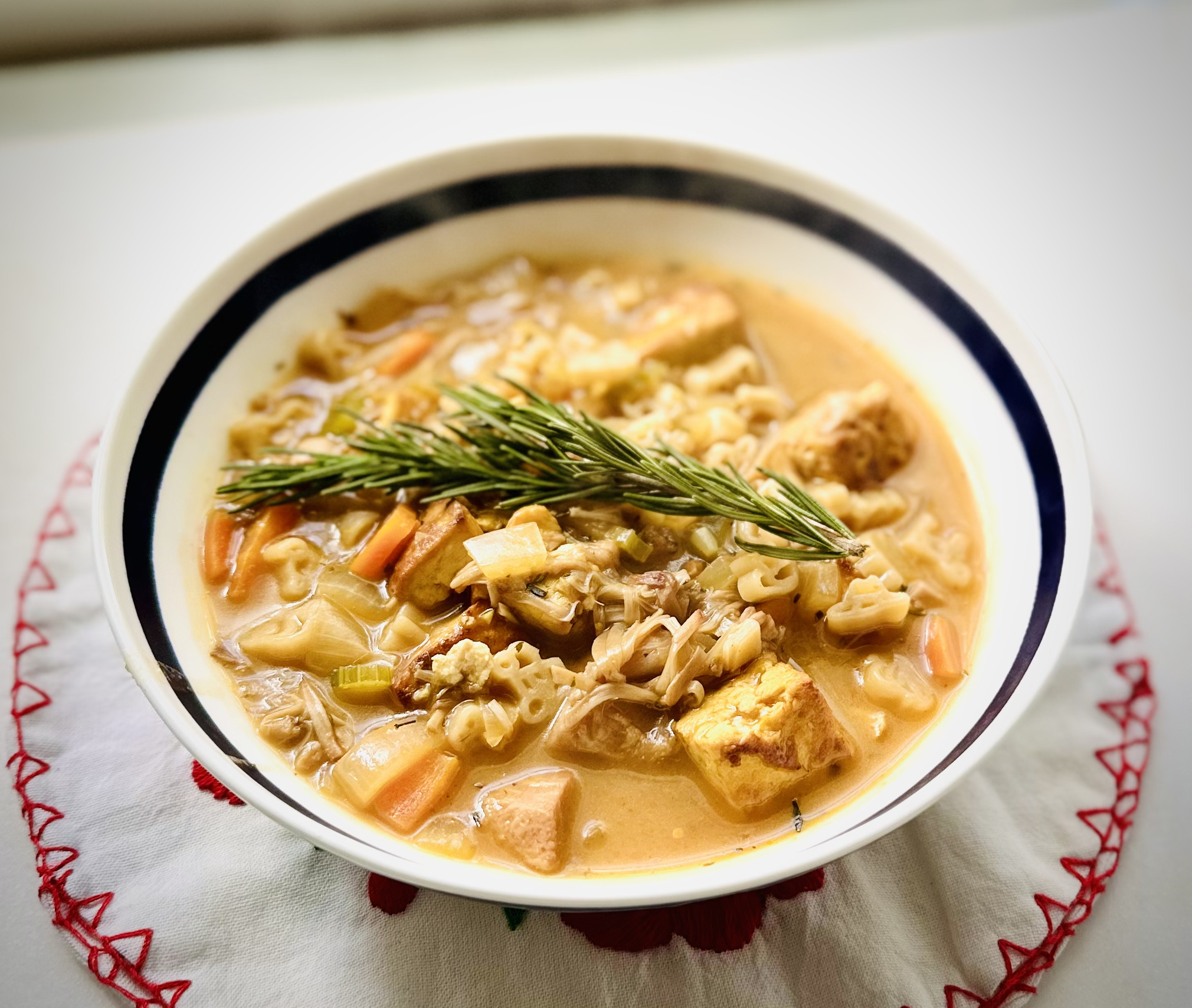
What is “No Chicken” Soup?
“No Chicken” soup is the plant-based evolution of the classic chicken noodle soup. It captures the three pillars of the original: a rich, golden broth, hearty mirepoix (carrots, celery, and onion), and tender noodles. Instead of meat, we use protein-rich alternatives like soy curls, chickpeas, or king oyster mushrooms to mimic that shredded texture, paired with a high-quality “no-chicken” bouillon to provide that unmistakable savory depth. It’s the ultimate “get well soon” meal that just happens to be vegan and gluten-free.
Ingredient Tips & Substitutions
- The “Chicken” Base: For that authentic yellow hue and savory punch, use a vegan “no-chicken” bouillon (like Better Than Bouillon No Chicken Base). If you can’t find it, a mix of vegetable broth, nutritional yeast, and a pinch of turmeric will get you very close.
- The Protein: * Soy Curls: These are the gold standard for texture. Soak them in warm broth first to infuse them with flavor.
- Chickpeas: A great whole-food option that adds a nice bite.
- King Oyster Mushrooms: Shred these with a fork for a remarkably realistic “shredded chicken” look and feel.
- The Noodles: To keep it gluten-free, look for brown rice fusilli or chickpea-based rotini. They hold up better in hot broth than thin corn-based noodles, which can sometimes dissolve if overcooked.
- The Fresh Finish: Never skip the fresh parsley and a squeeze of lemon at the end. It cuts through the saltiness of the bouillon and wakes up the whole bowl.
Detailed Cooking Guidance: The Golden Rules
The secret to a soup that doesn’t turn into a “noodle mush” lies in the timing:
- Sauté for Depth: Don’t just boil your veggies. Sauté the onions, carrots, and celery in a little olive oil or vegan butter until the onions are translucent. This “sweating” process releases the natural sugars and creates a base layer of flavor.
- The Separate Noodle Trick: If you aren’t serving the whole pot at once, cook your gluten-free noodles separately. Store them in a container with a splash of oil. Add the noodles to individual bowls and pour the hot soup over them. This prevents the GF noodles from absorbing all the broth and turning into a giant sponge in the fridge.
- The “Simmer, Don’t Boil” Rule: Once you add your broth and protein, keep the soup at a gentle simmer. A rolling boil can break down the vegetables too quickly and make the broth cloudy.
- Visual Cues: Your carrots should be “fork-tender”—meaning a fork goes in easily but they don’t fall apart. This usually takes about 12–15 minutes of simmering.
Storage & Usage Ideas
- The Fridge: This soup stays delicious for 3–4 days. As mentioned, keep the noodles separate for the best texture!
- Freezing: This is a freezer superstar. Freeze the broth, veggies, and “chicken” protein in quart-sized bags. Just leave out the noodles and fresh herbs; add those fresh when you reheat the soup for a “just-made” taste.
- Creative Twist: Turn leftovers into a “No-Chicken” Pot Pie. Thicken the leftover broth with a little cornstarch slurry, pour it into a baking dish, and top with a gluten-free biscuit crust or mashed potatoes.
- The “Cold-Buster” Add-on: If you’re feeling under the weather, grate an inch of fresh ginger and two extra cloves of garlic into the pot while sautéing the onions.
FAQ: Frequently Asked Questions
How do I make my vegan broth taste “chicken-y”?
The “umami” factor is key. If your broth feels thin, add a tablespoon of nutritional yeast, a teaspoon of white miso paste, or a drop of liquid smoke. These ingredients mimic the savory fats found in traditional chicken stock.
Why are my gluten-free noodles falling apart in the soup?
Gluten-free pasta lacks the “glue” of wheat. If cooked directly in the soup, the starches leak out and thicken the broth while the noodles become gummy. Always undercook them by 1–2 minutes if you plan on adding them to the hot liquid, or use the “cook separately” method mentioned above.
Can I make this in an Instant Pot?
Absolutely! Sauté the veggies using the “Sauté” function, add the rest of the ingredients (minus noodles and herbs), and manual pressure cook for 5 minutes with a quick release. Add the cooked noodles at the very end.
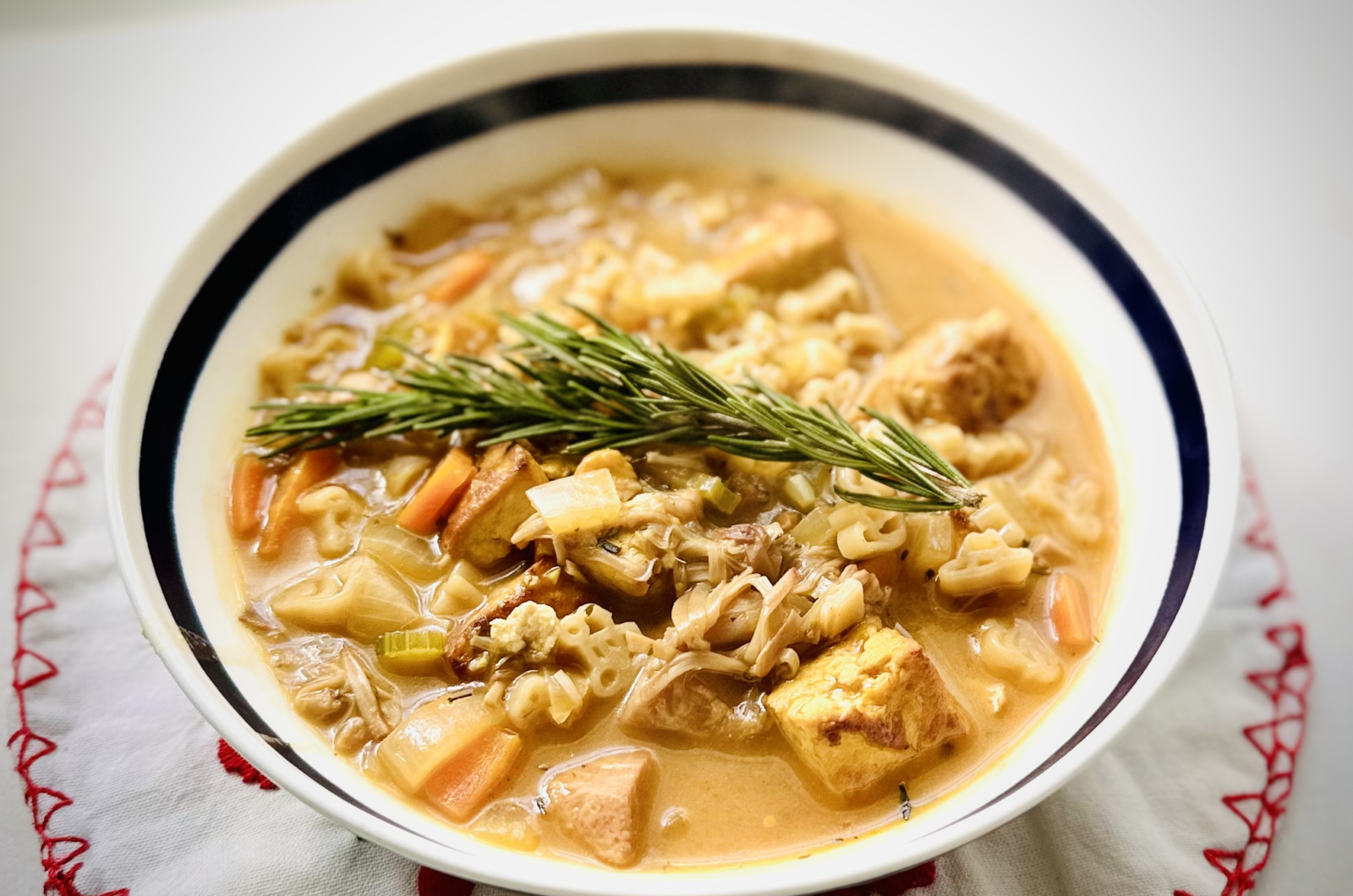
“No Chicken” Soup
6
servings30
minutes30
minutesAll the nostalgia, none of the bird. This is the golden, soul-warming bowl of ‘clever-comfort’ that proves plants do it better.
Ingredients
1 tbsp avocado oil
1 yellow onion
5 clove garlic
2 celery stalks
2 carrots
6 cups veggie broth
1 tbsp chopped rosemary
1 tsp thyme
8 oz gluten free pasta
1 can jackfruit
1 pack firm tofu
1 tbsp soy sauce
1 tbsp vegan oyster sauce
1 tbsp tomato paste
1 tbsp water
1 tsp mushroom powder
1 tsp turmeric
Directions
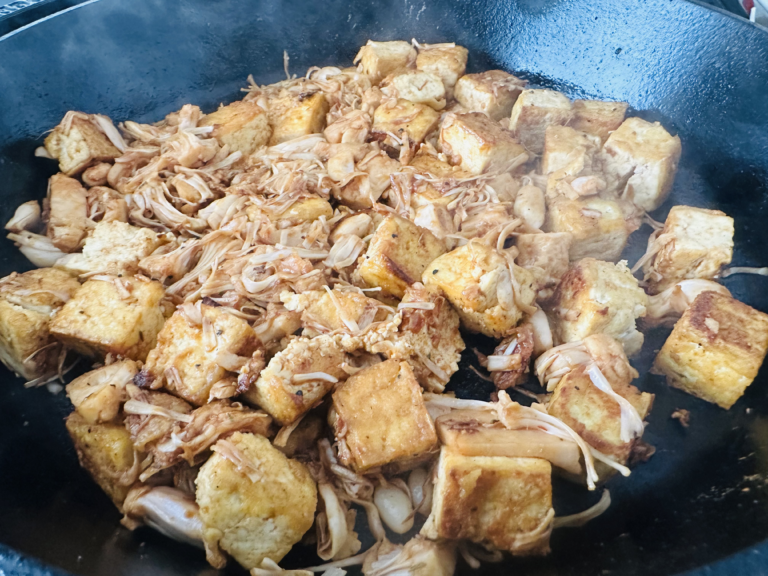
- Cube tofu and add to oiled pan on medium heat. Add salt and pepper, grill for 10-15 minutes or until browned on all sides.
- While you’re waiting for the tofu, open and drain jackfruit. Pull each piece apart to separate into smaller pieces.
- Add soy sauce, vegan oyster sauce, tomato paste, mushroom powder and water to a small bowl and whisk, set aside.
- When tofu is all browned, add jackfruit to the pan. Cook for a few minutes, stirring occasionally.
- Add soy sauce mixture, stir around and turn the heat down.
- Add oil and onion to big pot at medium heat. Cook for a minute or two.
- Add ginger, garlic, turmeric. Cook for a few minutes, stirring occasionally. Add thyme and rosemary. Stir for a bit.
- Add tofu and jackfruit to the soup. Let it simmer with the other ingredients for a few minutes.
- Add chopped carrots, chopped celery and broth. Bring to a boil, put down to medium low heat and cook at a simmer for 15-20 minutes.
- Add pasta, bring back to a medium boil, and cook according to package.
- Enjoy!