What is Thai Green Curry?
Known in Thailand as Gaeng Keow Wan (literally “Sweet Green Curry”), this dish is famous for being the spiciest of the “big three” Thai curries. Unlike Red or Yellow curry, the Green version relies on fresh young green chilies rather than dried ones, giving it a bright, grassy, and floral profile. In our plant-based version, we focus on layered aromatics—lemongrass, galangal, and kaffir lime—to create a depth of flavor that rivals any traditional recipe.
Ingredient Tips & Substitutions
- The Curry Paste: If you aren’t making your own paste, look for Maesri or Mae Ploy (check labels, as some contain shrimp paste). To keep it vegan and GF, Siete or Thai Kitchen are reliable pantry staples.
- Coconut Milk: Use full-fat canned coconut milk. Avoid the “lite” versions or the carton milk used for cereal; you need the fat to carry the fat-soluble flavors of the curry paste.
- The “Green” Boost: For that iconic emerald color, blend a handful of fresh spinach or Thai basil into a small amount of the coconut milk before adding it to the pot.
- Vegetables: Traditional Green Curry uses Thai eggplants (the small, round ones) and pea eggplants. If you can’t find those, Japanese eggplant or zucchini make excellent substitutes as they soak up the sauce beautifully.
- Kaffir Lime Leaves: These add a high-frequency citrus note that lime juice can’t replicate. You can find them frozen at most Asian grocers. If you absolutely can’t find them, use extra lime zest, but it’s worth the hunt!
Detailed Cooking Guidance: Don’t “Boil” the Curry
The most common mistake in making Thai curry is treating it like a standard soup. Here is how to get that restaurant-quality finish:
- Cracking the Cream: Don’t shake the can of coconut milk. Spoon off the thick “cream” at the top and fry your curry paste in that instead of oil. You’ll know it’s ready when the oil starts to separate from the paste (the “crack”). This releases the oils from the chilies and spices.
- The Palm Sugar Balance: Green curry should have a subtle sweetness. Use palm sugar or coconut sugar. It rounds out the sharp heat of the green chilies and makes the sauce taste “complete.”
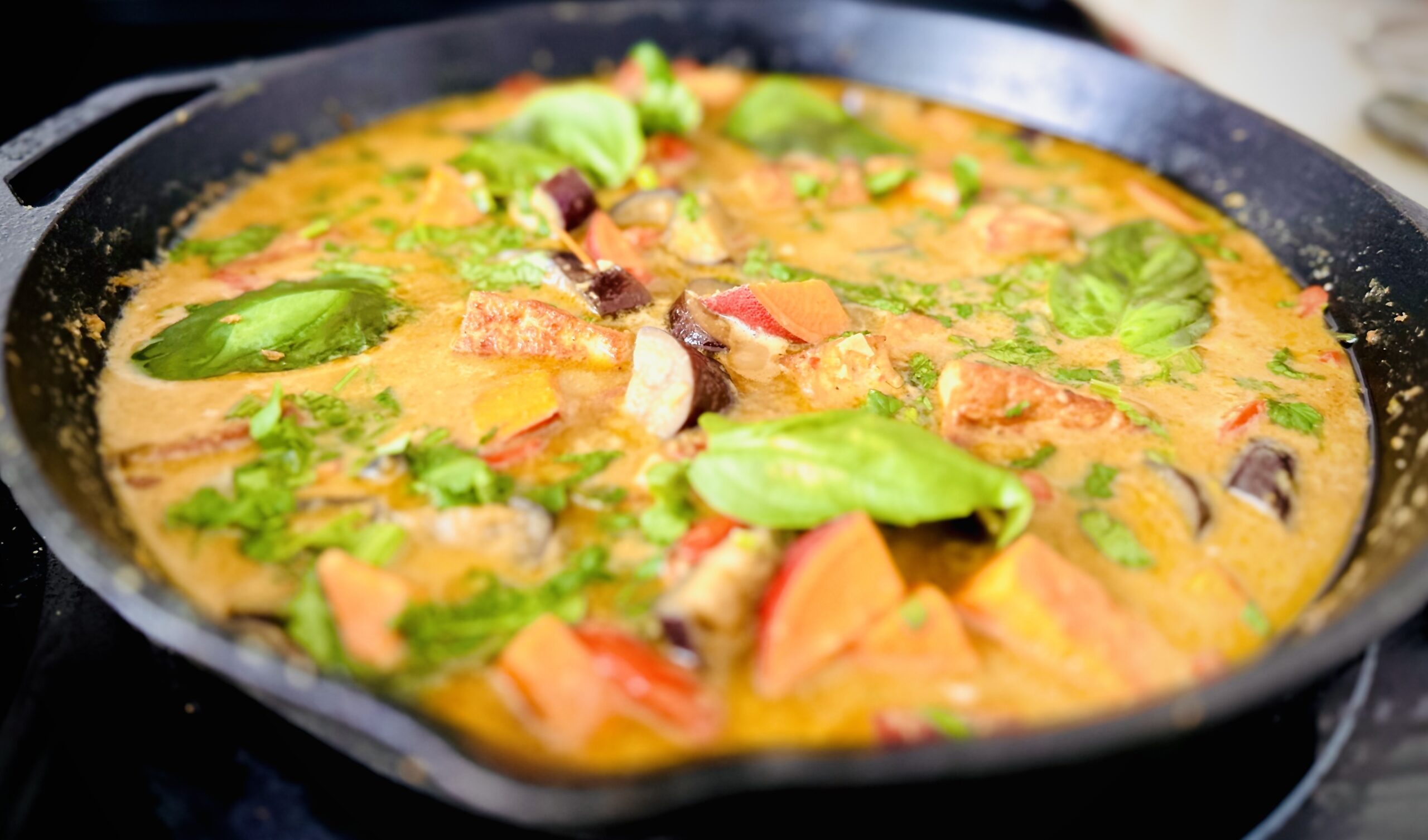
- Visual Cues: Look for the “oil pearls.” A perfectly cooked Thai curry will have small beads of green-tinted oil shimmering on the surface. This is a sign of a well-emulsified, properly fried sauce.
- The Herbs Go Last: Never boil your Thai basil. Turn off the heat, fold the basil in, and let it wilt in the residual warmth. This keeps the flavor fresh and prevents the leaves from turning black.
Storage & Usage Ideas
- Better with Age: Like a good chili or dal, the flavors in Green Curry settle and deepen overnight. It’s one of the best lunch leftovers in existence.
- Freezing: You can freeze the curry base (sauce and protein), but be warned that some vegetables (like bamboo shoots or zucchini) can get a bit mushy upon thawing. It stays good for up to 2 months in the freezer.
- Creative Leftovers: If you have just a little sauce left, use it as a poaching liquid for some silken tofu or pour it over a baked sweet potato for a quick fusion meal.
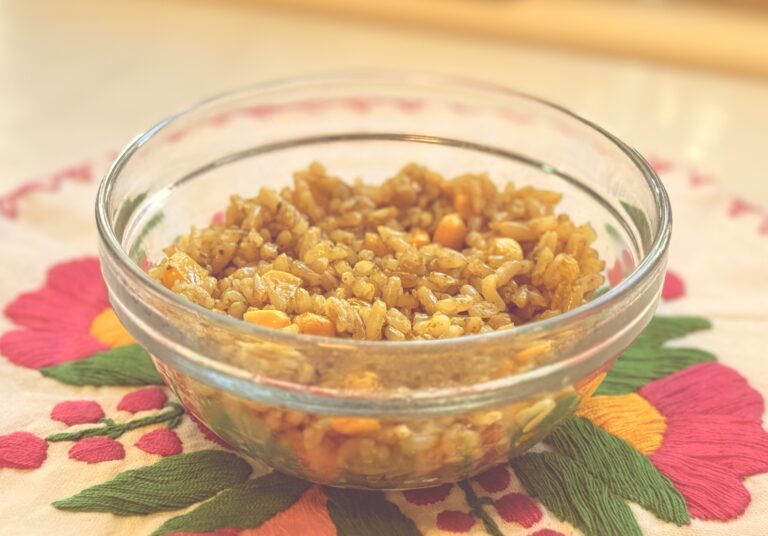
- Rice Pairings: While Jasmine rice is the standard, this is incredible served with Rice Vermicelli noodles (Khanom Jeen style) for a lighter, summery feel.
FAQ: Frequently Asked Questions
How do I make my Green Curry less spicy? Green curry is naturally hot! To tone it down, don’t use less paste (you’ll lose flavor); instead, add an extra half-can of coconut milk or a tablespoon of peanut butter. The fats help neutralize the capsaicin on your tongue.
Is Thai Green Curry gluten-free? Usually, yes! However, some pre-made pastes use soy sauce that contains wheat, or thickeners that aren’t GF-friendly. Always check for a “Gluten-Free” label on the jar, and ensure you are using Tamari or Vegan Fish Sauce for the salty element.
Can I use light coconut milk? You can, but the curry will be watery and the flavors won’t “cling” to your vegetables. If you want a lower-calorie version, use half full-fat coconut milk and half vegetable broth.
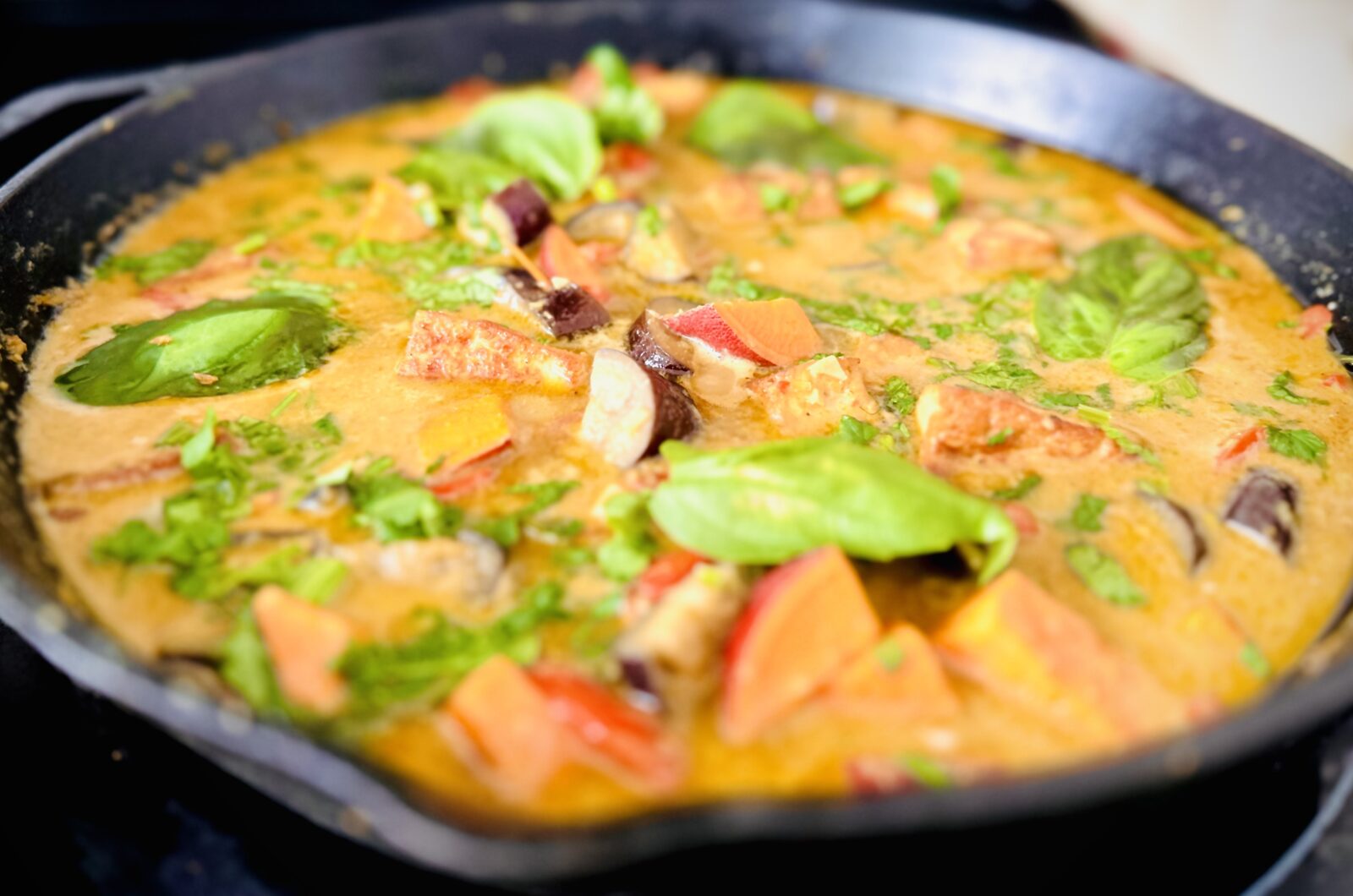
Thai Green Curry
4
servings30
minutes30
minutesCreamy, zesty, and vibrating with fresh herbs; this is a masterclass in balancing the heat of green chilies with the velvet touch of coconut milk.
Ingredients
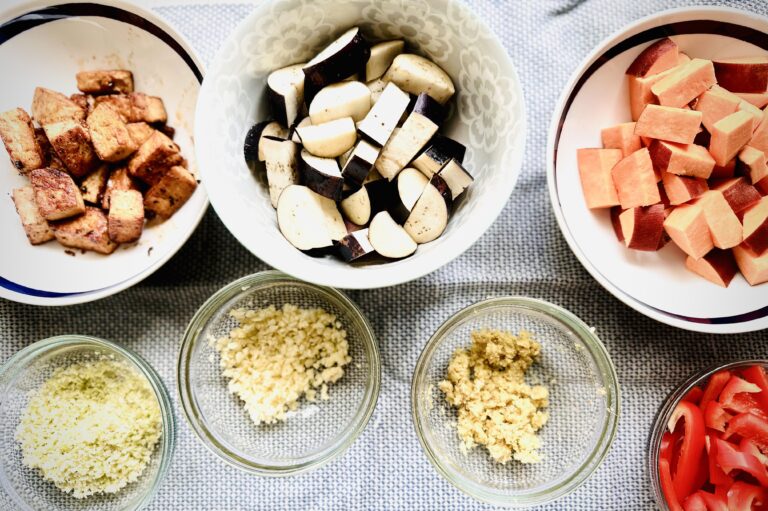
4 cloves Garlic
4 inches Ginger
2 stocks Lemongrass
1 Sweet potato
1 Bell pepper
1 block Tofu
1 cup Veggie broth
3 tbsp Chopped cilantro
1 handful Thai basil
1 lime Lime juice
5 tbsp Green curry paste
2 Chinese eggplant
2 tbsp Cooking oil
2 cans Coconut milk
1 tbsp Brown sugar
Salt
2 tbsp Soy sauce
2 tbsp Vegan oyster sauce
3 Thai red chilis
Directions
- Prep
- Cut ends off eggplant, cut in half lengthwise, and slice into 1/4 inch pieces; add to bowl and sprinkle some salt; let sit for 15+ minutes
- Chop garlic, ginger and lemongrass finely
- Cut sweet potato in 1/2 inch cubes
- Whisk together curry paste and a couple of tablespoons of the coconut milk in a small bowl

- Cook
- On medium heat, add oil to a large pan, add garlic, ginger and lemongrass and cook for a couple of minutes. Stir to make sure it doesn’t burn.
- Add the whisked curry paste and coconut milk, stir around and let cook for a minute while stirring
- Add the rest of the coconut milk, let cook for 4-5 minutes on medium heat
- Add the veggie broth and the sweet potato, eggplant, bell peppers, and sweet potato
- Add the soy sauce and oyster sauce
- Cover, let cook on medium heat for 8-10 minutes, stirring occasionally