What is Pad Thai?
Pad Thai is the quintessential Thai street food dish. It’s a stir-fry consisting of soaked dried rice noodles, bean sprouts, garlic chives, and a signature sauce built on tamarind paste. While traditional versions rely on dried shrimp and fish sauce for funk, this vegan version uses fermented soy (liquid aminos or soy sauce) and a touch of maple or coconut sugar to hit those high notes of Thai flavor. It’s fast, high-heat cooking that results in a complex, satisfying chew.
Ingredient Tips & Substitutions
- The Noodles: Use medium-width flat rice noodles (labeled “Chantabun”). Avoid the very thin vermicelli, as they will turn into a clump in the wok.
- Tamarind Paste: This is the heart of the dish. Look for the jars of “Tamarind Concentrate” (usually Thai brands like Cock Brand or Aroy-D). If you can only find the block with seeds, you’ll need to soak it and strain it first. Substitution: In a pinch, use a mix of lime juice and a dash of ketchup (don’t tell the purists!), but tamarind is truly irreplaceable for that authentic tang.
- The “Fish” Sauce Swap: Use Vegan Fish Sauce (often pineapple-based) or a high-quality Liquid Aminos paired with a crumbled sheet of Nori to get that “sea” flavor without the fish.
- The Protein: Extra-firm tofu is classic. Press it well so it gets crispy! You can also add “soy curls” for a more “chicken-like” stir-fry.
Detailed Cooking Guidance: Avoid the “Noodle Mush”
Pad Thai is all about the prep. Once the heat is on, things move fast.
- Don’t Boil the Noodles: This is the #1 mistake. Soak your rice noodles in very hot (but not boiling) tap water for 20–30 minutes. They should be “al dente”—flexible but still having a firm bite. They will finish cooking in the sauce.
- The Wok “Crowd” Control: If you are doubling the recipe, cook it in two batches. If you crowd the pan, the temperature drops, and the noodles will steam and break instead of searing.
- High Heat is Mandatory: You want the tofu and noodles to slightly “char” in the pan. This creates the “Wok Hei” (breath of the wok) flavor.
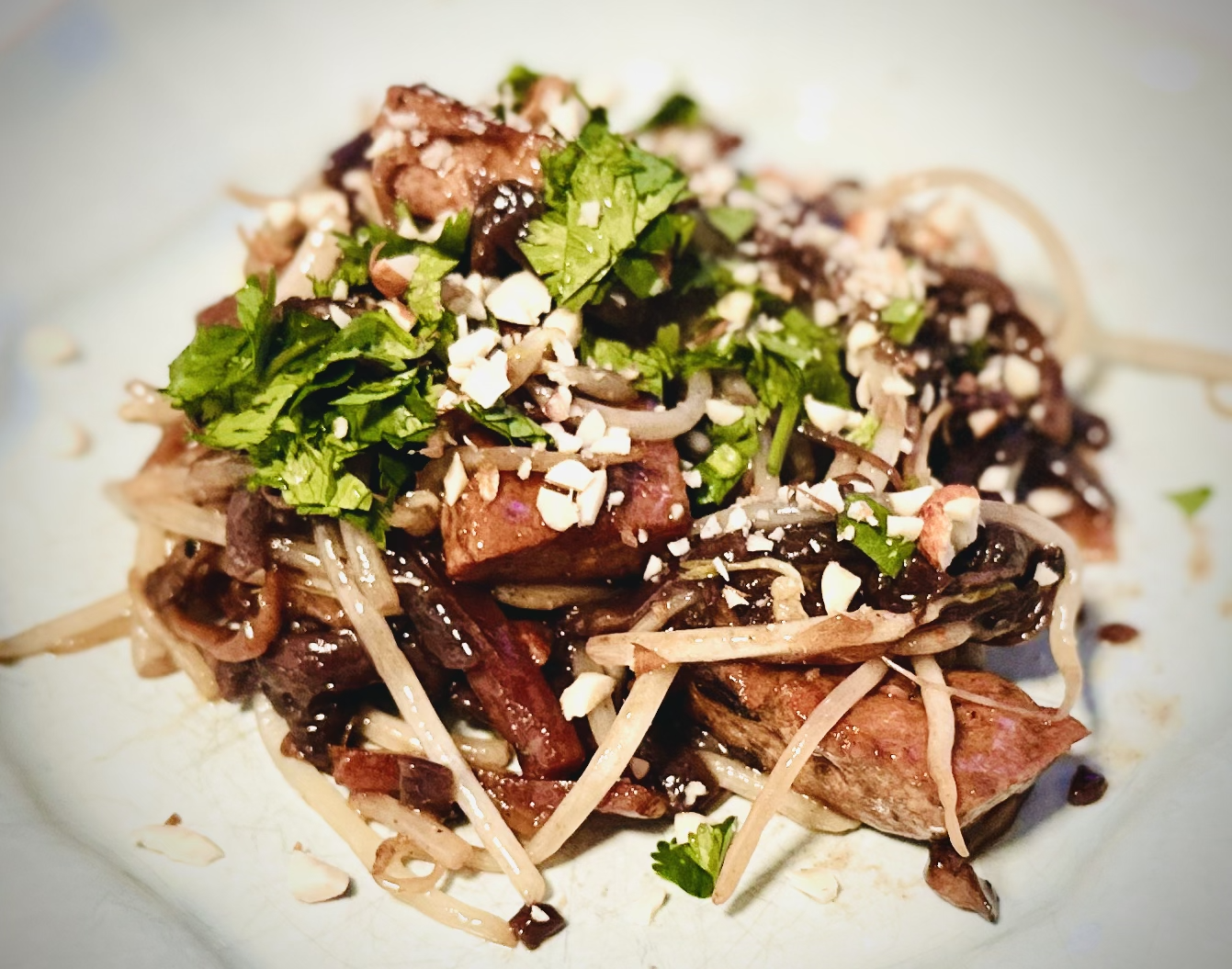
- The Visual Cue: The dish is ready when the noodles have absorbed all the sauce and turned a translucent, reddish-amber color. If they look dry, add a tablespoon of water at a time until they are glossy.
Storage & Usage Ideas
- Best Served Instant: Pad Thai is one of the few dishes that is significantly better the moment it leaves the pan.
- Leftovers: If you do have leftovers, they keep for 2 days. Reheat them in a pan with a splash of water to loosen the noodles; the microwave tends to make rice noodles rubbery.
- The “Lunch Box” Cold Salad: Surprisingly, leftover Pad Thai is delicious cold! Toss it with some extra shredded cabbage and a squeeze of lime for a chilled noodle salad.
- The Topping Station: Pad Thai is meant to be customized at the table. Always serve with a side of:
- Crushed roasted peanuts
- Extra red chili flakes
- Fresh lime wedges
- Raw bean sprouts for crunch
FAQ: Frequently Asked Questions
Why are my Pad Thai noodles sticking together in a big clump? This usually happens if the noodles were over-soaked or if there wasn’t enough oil in the pan. To fix a clump in real-time, add a tiny bit more oil and a splash of water, then use tongs to gently “lift and shake” the noodles rather than stirring them in circles.
Is Pad Thai naturally gluten-free? Almost! The noodles are made of rice, which is safe. However, the sauce often uses soy sauce (which contains wheat). To make this 100% gluten-free, ensure you are using Tamari or Coconut Aminos in place of standard soy sauce.
Can I use peanut butter in the sauce? Traditional Pad Thai sauce does not contain peanut butter—the peanut flavor comes from the garnish at the end. However, if you love a creamier, “satay-style” noodle, you can whisk in a tablespoon of peanut butter to the sauce. Just know it won’t be a traditional Thai profile!
Pad Thai
4
servings30
minutes40
minutesTangled rice noodles, crunchy peanuts, and a sauce so savory you won’t believe it’s plant-based. This is the 20-minute street food classic, mastered at home.
Ingredients
- Tofu
14 oz firm tofu
1 tbsp vegan oyster sauce
1 tbsp soy sauce
1 tsp maple syrup
1 tsp tomato paste
- Pad Thai Sauce
3 tbsp brown sugar
3 tbsp water
3 tsp tamarind concentrate
3 tbsp vegan oyster sauce
- Pad Thai
8 oz pad thai noodles
2 cup oyster mushrooms (pulled apart)
1/4 cup chopped shallots
2 cup bean sprouts
1/3 cup roasted peanuts, chopped
1 lime
3 stalk green onion
4 clove garlic
Directions
- Tofu
- Cube tofu and add to oiled pan on medium to low heat.
- Periodically flip the pieces of tofu until browned on most sides.
- Add the rest of the tofu ingredients to the tofu and mix around, set aside.
- Pad Thai Sauce
- Add sugar to small pan on medium heat, keep stirring until melted and changes color, and then add the rest of the sauce ingredients
- Keep stirring for a minute and then turn off heat. The sugar will properly dissolve while you prepare the rest of the dish.
- Pad Thai
- Add oyster mushrooms to lightly oiled pan. Stir occasionally until it somewhat browns. Set aside.
- Soak noodles in hot water for 10 minutes.
- Add garlic and shallots to oiled pan on medium heat. Stir occasionally for a few minutes to let the flavors infuse in the oil. You can optionally add chopped chilis at this point.
- Add in the tofu and oyster mushrooms. Stir around until everything is heated up.
- Add in the noodles and sauce. Keep cooking and stirring until the noodles are cooked. Taste every minute or so to make sure it’s cooked all the way. If not, add a little bit of water and keep doing that until the noodles are properly cooked.
- Add the bean sprouts and half the peanuts and turn off the heat.
- Serve with lime and sprinkle peanuts on top.