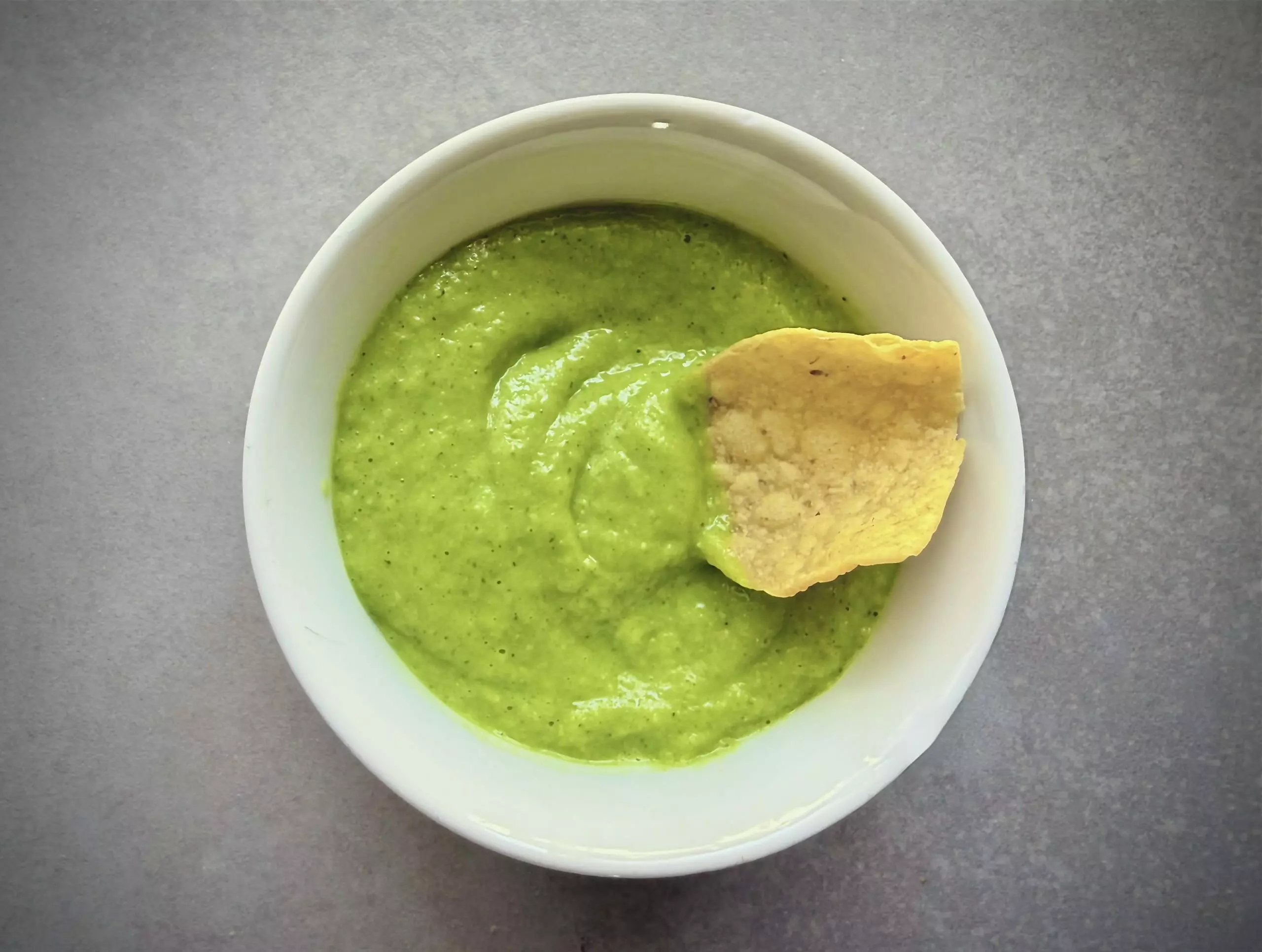
This avocado tomatillo salsa verde is the green sauce I make more than anything else in my kitchen. It comes together in 20 minutes, requires almost no technique, and makes everything it touches taste more alive. I started making it mild – no serranos – because my five year old needs to be able to eat it too. And honestly, even without the heat, it’s one of the most satisfying things I put on the table. Bright from the tomatillos, creamy from the avocado, with just enough lime and garlic to keep it interesting. We go through a batch in a day.
What Is Avocado Tomatillo Salsa Verde?
Salsa verde – literally “green sauce” in Spanish – is one of the foundational sauces in Mexican cooking. The traditional version is built on tomatillos, which are small green fruits that look like tomatoes wearing a papery husk. They have a tart, slightly citrusy flavor that’s completely different from a ripe tomato, and they form the backbone of most green salsas.
This version adds avocado to the mix, which does two things: it softens the tartness of the tomatillo and gives the salsa a creamy, spoonable body that a standard salsa verde doesn’t have. The result sits somewhere between a fresh salsa and a guacamole – it’s looser than guac, thicker than salsa, and more interesting than either one on its own. If you’re familiar with the avocado-based green sauces you see drizzled over street tacos, this is in that family.
The serranos in the original recipe are optional and I leave them out when I’m cooking for my son. If you want heat, add one or two – they’ll push it firmly into spicy territory without overwhelming the other flavors.
Avocado Tomatillo Salsa Verde: Ingredient Tips & Substitutions
Tomatillos are sold fresh at most grocery stores, usually near the tomatoes, with their papery husks still on. Look for firm ones with tight-fitting husks. Peel the husk off and rinse them – they’ll feel slightly sticky, which is normal. If you can’t find fresh tomatillos, canned ones work in a pinch, though the flavor is a bit flatter. Drain them well before using.
The avocado should be fully ripe – it should give easily when you press it. An underripe avocado will make the salsa grainy and bland. If yours are rock hard, leave them on the counter for a day or two. A Hass avocado is ideal here; the creamier flesh blends more smoothly than larger varieties.
Serranos are hotter than jalapeños by a fair amount, so start with one if you’re not sure of your heat tolerance. You can always add more. If you can’t find serranos, a jalapeño works as a substitute – you’ll get a milder, slightly grassier heat.
For the cilantro, a small loose handful is the right amount. If you’re cooking for someone who finds cilantro soapy, you can cut it in half or leave it out entirely – the salsa still works without it.
One note on the garlic: the recipe calls for a small clove, and I mean it. Raw garlic is powerful in a fresh salsa, and too much will take over everything else. When in doubt, use less than you think you need and taste as you go.
How to Make This Salsa Verde (And Get It Right)
The tomatillos get boiled, not roasted, which keeps the salsa tasting fresh and bright rather than smoky. Bring a pot of water to a boil, add the tomatillos, and cook for 5 to 7 minutes – you want them just softened, not falling apart. They’ll turn from bright green to a more muted olive green. Pull them when they’re tender but still holding their shape.
Drain them and let them cool for a few minutes before blending. If you add them while they’re still steaming hot, they’ll partially cook the avocado and dull its color. A few minutes of cooling makes a difference.
Everything goes in the blender together: tomatillos, avocado, garlic, onion, lime, salt, cilantro. Blend until smooth. Add water a tablespoon at a time if it’s too thick to blend – you want it spoonable, not pourable. Taste it. Add more salt or lime if it needs it. This is a fresh salsa, so it should taste bright and a little sharp. If it tastes flat, it usually needs acid or salt.
The most important thing to know: this salsa doesn’t keep well overnight. The avocado will oxidize and turn brown, just like guacamole. It won’t be dangerous to eat, but it won’t look or taste as good. Make it within a few hours of serving, and press plastic wrap directly onto the surface if you’re not serving it right away. A squeeze of extra lime on top helps slow the browning too.
How to Store and Serve Avocado Salsa Verde
Same-day is ideal. If you need to make it a few hours ahead, press plastic wrap directly against the surface of the salsa (no air pockets) and refrigerate. It’ll stay green and fresh for a few hours. By the next morning it’ll start to darken – it’s still edible but not at its best.
The obvious uses are the Mexican table classics – tacos, burritos, quesadillas, sopes, enchiladas. It pairs especially well with this vegan cashew crema on a taco spread: the crema is rich and nutty, the salsa is bright and tart, and together they cover a lot of ground.
But where this salsa really surprised me was at breakfast. It’s incredible on eggs – scrambled, fried, poached, it doesn’t matter. Spoon it over a breakfast burrito and it cuts through all the richness in a way that hot sauce alone doesn’t. It’s great on breakfast potatoes. It’s great on a breakfast sandwich. If you make a batch on a Sunday morning, you’ll find yourself putting it on everything through the week – and then being sad when it’s gone by Tuesday.
For a simple weeknight move: warm up some canned black beans, serve them over rice, and spoon this salsa and some pickled red onions with serrano on top. Twenty minute dinner, zero complaints.
Common Questions
Can I roast the tomatillos instead of boiling them? Yes, and it’ll give you a different but equally good result. Roasting (under the broiler or directly on a dry skillet) adds a smoky, slightly caramelized depth that boiling doesn’t. It’s a better choice if you want something more complex and less bright. Boiling keeps it fresher tasting, which is why I default to it for this recipe.
Why is my salsa too thin? The water content of tomatillos varies, and some avocados have more moisture than others. If your salsa comes out runnier than you’d like, add a second avocado or blend in a small handful of extra cilantro to thicken it up. Alternatively, let it sit in the fridge for 20 minutes – it’ll thicken slightly as it chills.
Can I make this without cilantro? Yes. The salsa will taste a bit more straightforward without it, but the tomatillo and avocado carry the dish on their own. A little flat-leaf parsley can stand in for cilantro if you want some green herb flavor without the divisive stuff.
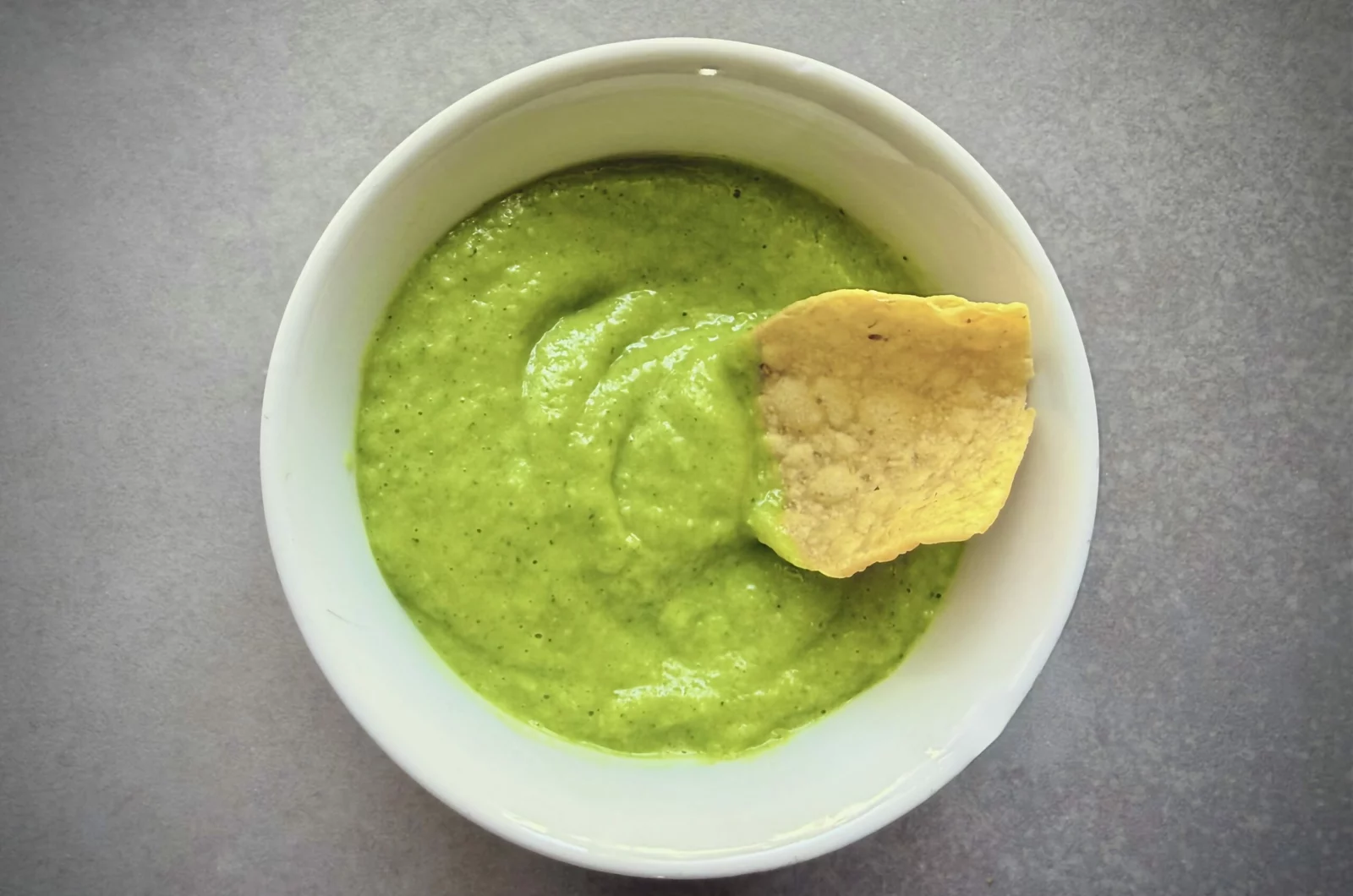
Avocado-Tomatillo Salsa
8
servings10
minutes10
minutes300
kcalCreamy, bright, and ready in 20 minutes – this avocado tomatillo salsa verde is the green sauce that makes everything better, from Sunday tacos to Monday morning eggs.
Ingredients
6 tomatillos, husked and rinsed
1 ripe avocado
2 garlic gloves
1/2 white onion
1 lime, juiced
1 tsp salt
1 handful fresh cilantro
2 tbsp water (or as needed)
2 serranos (optional)
Directions
- Cook tomatillos: Boil 5–7 minutes until just softened. Drain and cool slightly.
- Blend: Combine tomatillos, avocado, garlic, onion, lime juice, salt, and cilantro in a blender.
- Adjust: Blend until smooth. Add water 1 tbsp at a time to reach a spoonable consistency.
- Taste: Adjust salt and lime. Chill until serving.