
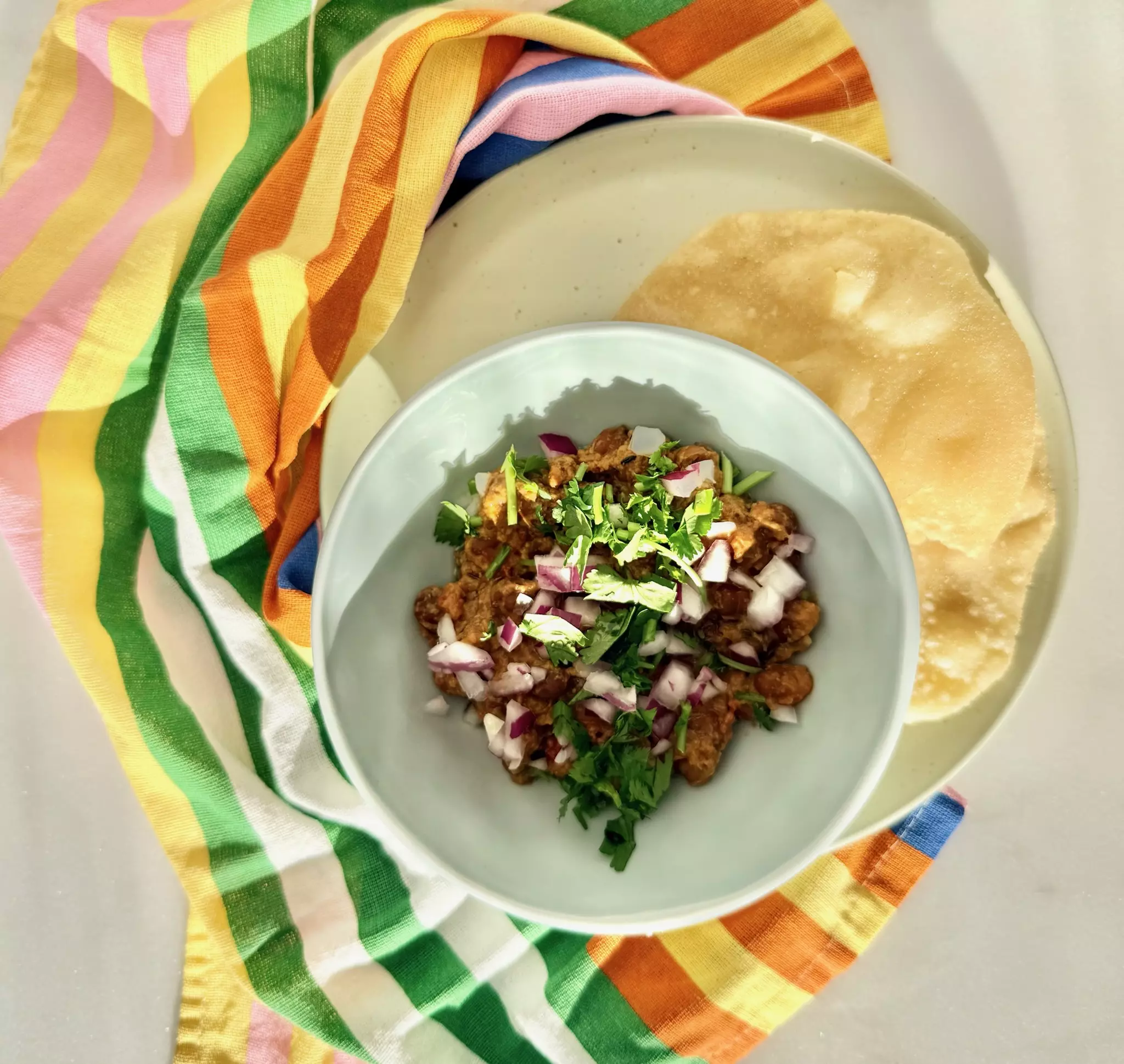
Gujarati chana nu shaak was never the dish anyone made a fuss over, and that is exactly why it is worth writing down. It showed up on weeknights in a small steel katori next to the rotli, brown chickpeas in a thin, glossy gravy, and it was almost always the first thing to empty. It got balanced by taste and never by measuring, chasing that Gujarati edge where sweet, sour, and spicy all land in the same spoonful.
If the only chickpea curry you know is the dark, oniony Punjabi chole, this will feel like a different dish entirely. It is lighter, brothier, and built without onion or garlic, tempered instead with mustard seeds, cumin, hing, and curry leaves. It is quiet food, but the kind you keep going back to.
What Is Gujarati Chana Nu Shaak?
In Gujarati, shaak simply means a cooked vegetable or legume dish, the everyday centerpiece of a thali. Chana nu shaak is the chickpea version, and in most Gujarati homes it is made with kala chana, the small brown chickpeas that are nuttier, firmer, and earthier than the big white kabuli chana used up north.
The flavor follows the classic Gujarati triangle: a little sweetness from jaggery, a clear sourness from lemon or kokum, and warmth from green chili and dry spices. There is no long-browned onion base here. Instead the dish is defined by its vaghar, a quick tempering of whole spices and hing bloomed in hot oil, which does the aromatic work that onion and garlic do elsewhere. The result is a thinner, spoonable gravy meant to be one bright note in a larger plate, not a heavy main.
Gujarati Chana Nu Shaak: Ingredient Tips & Substitutions
Kala chana are the heart of this shaak. Look for them at any Indian grocer or online, sometimes labeled brown or black chickpeas. They need an overnight soak and cook longer than white chickpeas. In a pinch you can use canned white chickpeas, but you lose the nutty firmness that makes this dish distinct.
Hing (asafoetida) is not optional here. A small pinch bloomed in oil gives the savory, almost oniony depth that stands in for the onion and garlic this dish leaves out. A little goes a long way, so measure with a light hand.
Dhana-jeeru is the Gujarati pantry blend of ground coriander and cumin, usually mixed about two parts coriander to one part cumin. If you do not have it premixed, just combine the two yourself.
Jaggery (gur) brings the gentle sweetness. Grate it so it melts evenly into the gravy. Brown sugar works in a pinch, though jaggery has a deeper, more mineral flavor that suits the dish better.
Kokum is a dried sour fruit that gives a clean tang without the sharpness of lemon. If you cannot find kokum, lemon juice or a small piece of tamarind will do the job.
Besan (chickpea flour) is the quiet trick that gives the gravy its silky body. Whisk it into water first so it does not clump when it hits the pot.
How to Make This Chana Nu Shaak (And Get It Right)
Start with the chickpeas. Soak the kala chana overnight, then pressure cook until fully tender. Kala chana stay a little toothsome even when done, so give them more time than you think, around 20 to 25 minutes at pressure. Save the dark cooking liquid, because it becomes the broth for the gravy.
The vaghar is where most of the flavor is built, and where most mistakes happen. Heat the oil properly before the mustard seeds go in, and wait for them to pop before adding cumin, hing, and curry leaves. Keep the heat moderate. Hing and curry leaves burn quickly, and burnt hing turns bitter, so move to the next step within seconds.
Unlike the Punjabi version, you are not chasing a deep brown masala. Cook the tomato and spices just until the tomato softens and the oil starts to show at the edges, about five to seven minutes. Then add the chickpeas and enough reserved liquid to make a loose, soupy gravy.
The besan slurry is the finishing move. Whisk one tablespoon of besan into a quarter cup of water until smooth, then stir it in and simmer a few minutes. It thickens the broth to a silky consistency without making it heavy. Balance at the very end: add jaggery and lemon or kokum, then taste and adjust. It should read gently sweet, clearly sour, and warmly spiced all at once. That final tasting step is the whole dish, so do not skip it.
How to Store and Serve Gujarati Chana Nu Shaak
Chana nu shaak keeps in the fridge for up to four days, and the flavor actually improves overnight. It thickens as it sits because of the besan, so loosen it with a splash of water when you reheat. It also freezes well for up to two months.
Traditionally this shaak is served as part of a thali, in a small katori alongside rotli or bhakri and rice. It pairs naturally with a dry sabzi like my Bhindi Nu Shaak to round out the plate.
It is also more flexible than it looks. Spoon it over rice for a quick lunch, or lean into its chaat roots: top a bowl with chopped onion, sev, and a drizzle of green chutney for a fast, snacky version. And if you want to see how the same legume goes in a completely different direction, try the darker, richer Punjabi Chana Masala.
Common Questions
What is the difference between chana nu shaak and Punjabi chole? They start from the same idea but end up opposites. Punjabi chole uses large white chickpeas in a dark, heavily browned onion-tomato-garlic gravy that is rich and tangy-hot. Gujarati chana nu shaak uses small brown kala chana in a lighter, sweet-sour gravy with no onion or garlic, tempered instead with mustard, hing, and curry leaves.
Can I make Gujarati chana nu shaak without a pressure cooker? Yes. Simmer soaked kala chana in plenty of water for about an hour to an hour and a half, until they are fully tender, topping up the water as needed. Canned chickpeas work too, though the texture and depth will be a little different.
What can I use instead of kokum? Lemon juice is the easiest swap and gives a bright, clean sourness. A small piece of tamarind, soaked and squeezed, is closer to the mellow, fruity tang that kokum brings.
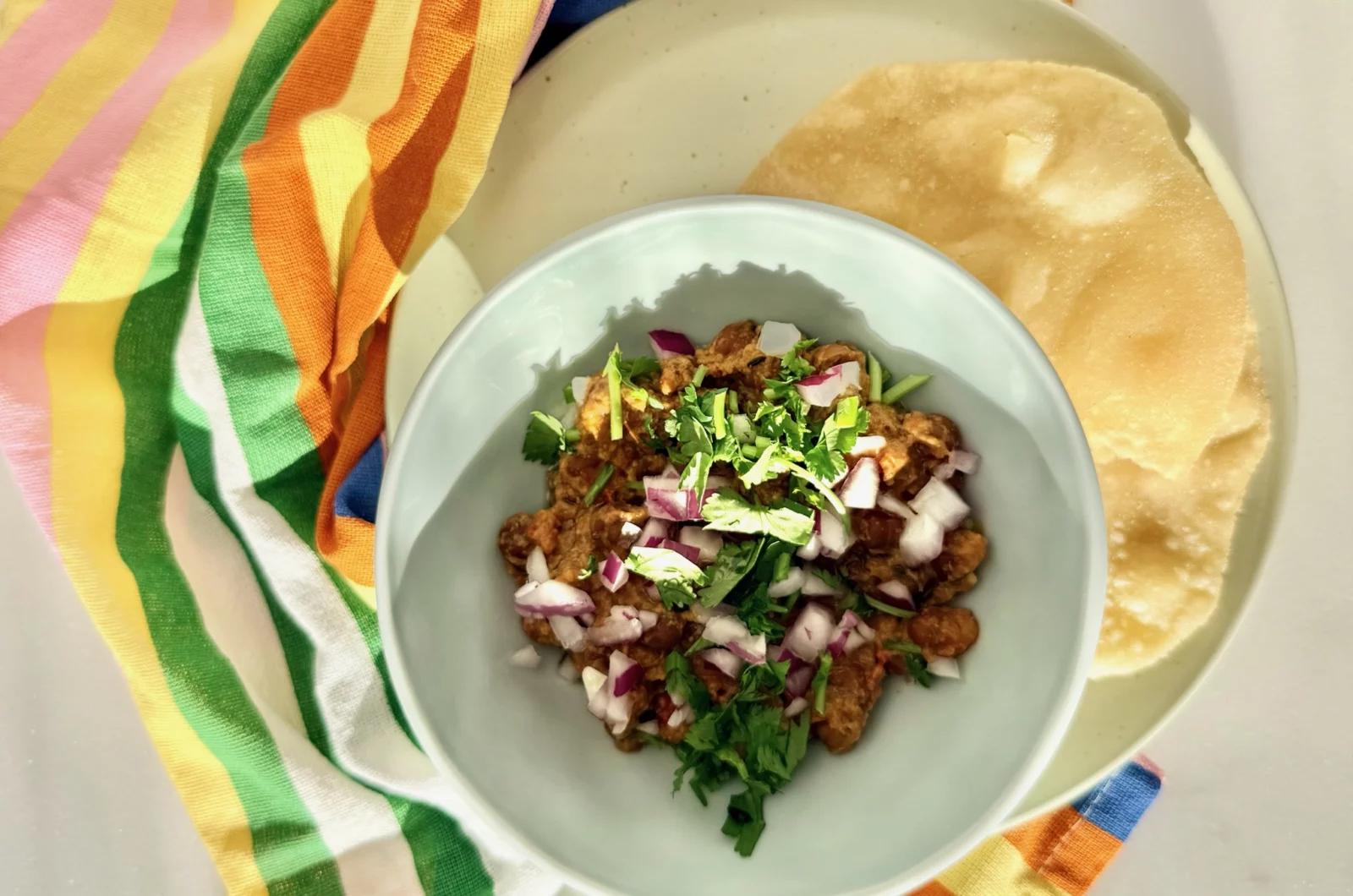
Gujarati Chana Nu Shaak (Kala Chana, Vegan)
4
servings15
minutes40
minutes230
kcalLight, brothy, and balanced on that sweet-sour-spicy edge. This Gujarati chana nu shaak turns humble brown chickpeas into the katori everyone empties first on a thali.
Ingredients
- Chickpeas
1 cups dried kala chana (brown chickpeas)
3 cups water
1/2 tsp salt
- Vaghar (tempering)
2 tbsp neutral oil
1 tsp mustard seeds
1 tsp cumin seeds
1/2 tsp hing (asafoetida)
8-10 curry leaves
2 dried red chilies
- Masala
1 tbsp ginger-green chili paste (about 1-inch ginger + 1-2 green chilies)
1 cup finely chopped tomatoes
1/2 tsp turmeric
1 tbsp dhana-jeeru (ground coriander-cumin blend)
1 tsp red chili powder (Kashmiri for color)
1/2 tsp garam masala
salt (to taste)
- Sweet-sour Finish
1 tbsp besan (chickpea flour), whisked in 1/4 cup water
1.5 tbsp jaggery, broken up (or brown sugar)
juice of 1/2 lemon
1/2 cup fresh cilantro, chopped
1/2 cup fresh onion, chopped
Directions
- Cook the chana. Drain the soaked kala chana and pressure cook with water, salt, and turmeric until fully tender, about 20-25 minutes at pressure. Reserve the dark cooking liquid. (Canned: simmer 10 minutes in 2 cups water to build body.)
- Vaghar. Heat oil over medium. Add mustard seeds and let them pop. Add cumin, then hing, curry leaves, and dried red chilies. Fry 20 seconds until fragrant, watching that the hing does not burn.
- Build the gravy. Add ginger-green chili paste, cook 1 minute. Add tomato, turmeric, dhana-jeeru, and chili powder. Cook 5-7 minutes until the tomato softens and the oil just shows. This is a lighter bhuna than the Punjabi version.
- Simmer. Add the cooked chana with enough reserved liquid to make a thin, soupy gravy. Simmer 10 minutes.
- Thicken and balance. Whisk the besan slurry until lump-free and stir it in. Simmer 3-4 minutes. Add jaggery and lemon or kokum. Taste and chase the balance: gently sweet, clearly sour, warmly spiced.
- Finish. Stir in garam masala and cilantro. Serve with rotli, bhakri, or plain rice as part of a thali.
