
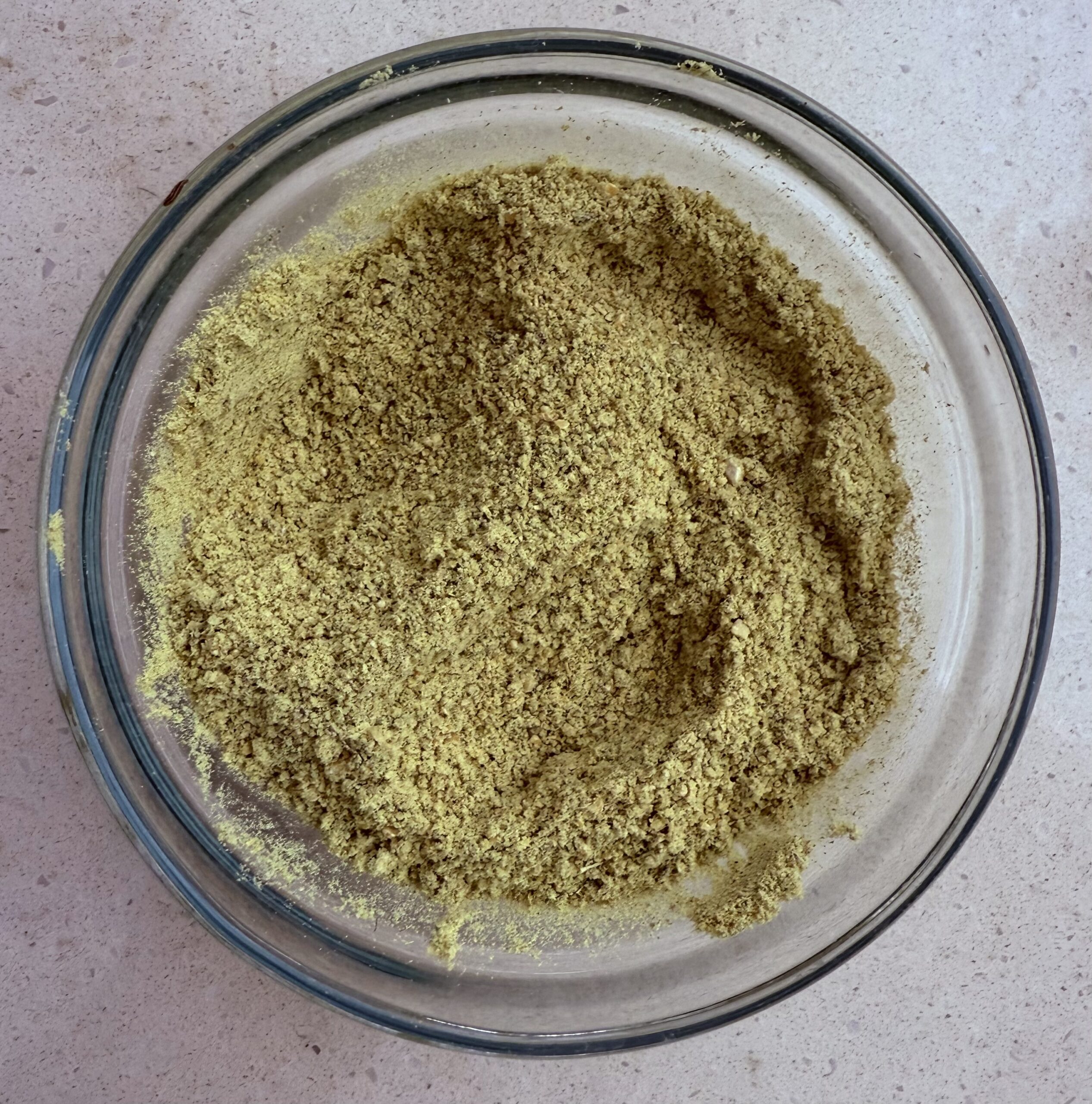
What is Sambar Masala?
Sambar masala literally means sambar spice mix. So then what is sambar, you ask? It’s a spicy, savory lentil soup, cooked with various veggies, and it’s a staple of South Indian cuisine. It’s often eaten with dosas or idli, but you’ll find it at practically every meal in South India – breakfast, lunch, and dinner.
The masala itself is a dry-roasted blend of lentils, coriander, fenugreek, cumin, dried chilis, and curry leaves, ground into a fine powder. It’s what gives sambar its signature warmth and depth. It’s earthy, slightly nutty, with a slow-building heat.
You can easily buy sambar powder at any Indian grocery store (and I often do!), but the homemade version is a different experience. Roasting the spices fresh brings out oils and aromas that the pre-packaged stuff just can’t match. And once you have a jar of it, it lasts for months, so the 20 minutes of effort pays off over and over.
Ingredient Tips & Substitutions
You can find all of these ingredients at most Indian stores, with the exception of curry leaves. I personally think the curry leaves are the best part of this masala, but it’s not totally essential. You can substitute cilantro (with stems) or lime zest for a slightly different taste, or you can just leave it out altogether. But if you’re able to find curry leaves, I would go for it. And you can store the rest of the curry leaves in your freezer for months.
As for the dals or lentils, you can absolutely mix and match with whatever you’ve got. So if you only have toor dal, then just use that. Or if you have none of these dals just use split peas or red lentils. You should be able to get all other ingredients from a well stocked grocery store, so don’t let the ingredient list intimidate you!
For the dried red chilis, I use whole Kashmiri chilis for color and mild heat, but any dried red chili works. If you’re sensitive to spice, start with 5 instead of 10. You can always add more next time.
Tips For Roasting
The roasting step is where all the magic happens, so it’s worth getting it right. Keep your pan on low to medium heat. You’re toasting, not frying. You want the lentils to turn a light golden brown, and you’ll know they’re ready when they start smelling nutty and fragrant. Stir frequently and don’t walk away. Lentils can go from perfectly toasted to burnt in about 30 seconds.
Add the coriander and fenugreek after the lentils, since they toast faster. And the curry leaves go in last – they’ll crackle and crisp up in under a minute. Once everything is off the heat, let it cool completely before grinding. Warm spices clump up and don’t grind as evenly.
Storage and Ways to Use It
Store your sambar masala in an airtight jar at room temperature and it’ll stay fresh for 3–4 months. I keep mine in a small mason jar right next to the stove so I reach for it constantly.
The obvious use is sambar (of course), but don’t stop there. I’ve been stirring a teaspoon into ramen broth for a smoky, South Indian twist. It’s also great sprinkled over roasted vegetables, mixed into a yogurt dip, or added to a simple dal for extra depth. Think of it like your secret weapon – a little goes a long way.
Why You’ll Love This Recipe
Sambar masala is the soul of South Indian cooking – a fragrant, fiery, deeply savory spice blend that gives sambar its signature character. Toasty lentils, warming spices, and a hint of curry leaf come together to create a masala that’s just as essential to a bowl of sambar as the vegetables and tamarind. Whether you’re pouring it over idli, dipping dosa, or stirring it into a weeknight soup, this spice blend packs pure comfort in every spoonful.
Growing Up With Indian Food
Growing up in Southern California, sambar wasn’t part of my Gujarati heritage – but it was definitely part of my life. My family made sambar at home often, and visits to South Indian restaurants were a monthly ritual. Dosa without sambar? Unthinkable. Even though I’m not South Indian by background, sambar masala has always felt like a part of my food identity. Now, I’m starting to explore just how versatile this spice can be — from jazzing up rice cakes to infusing depth into a ramen broth. Making it fresh at home feels like bottling up a piece of nostalgia — with room to invent something new.
Common Questions
Can I use a blender instead of a coffee grinder? A high-speed blender like a Vitamix works, but a coffee grinder gives you the finest, most even powder. If you’re using a blender, grind in small batches and shake it between pulses to get everything evenly ground.
How spicy is this without the chilis? Without the chilis it’s very mild – warm and earthy but not hot at all. The chilis are totally optional, so leave them out if you’re cooking for kids or anyone who’s spice-averse.
What’s the difference between sambar masala and garam masala? They’re completely different blends. Garam masala is North Indian, heavy on cinnamon, cloves, and cardamom – sweet and warm. Sambar masala is South Indian, built on roasted lentils, fenugreek, and curry leaves – earthy and savory. They’re not interchangeable.
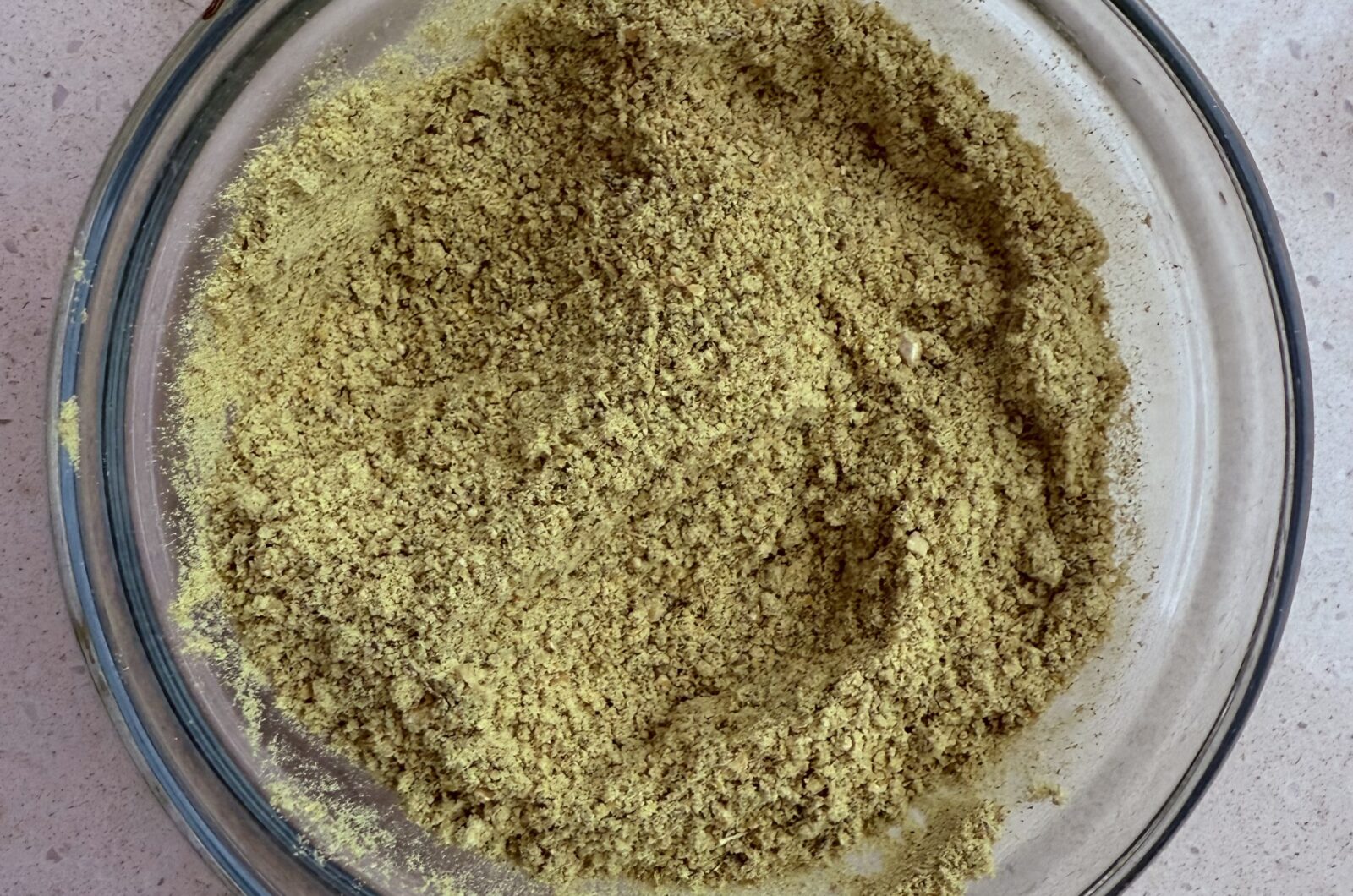
Authentic South Indian Sambar Masala
4
servings30
minutes40
minutesThis homemade sambar masala is bold, earthy, and packed with roasted lentils, spices, and curry leaves—perfect for sambar, dosa, or even creative twists like ramen!
Ingredients
2 tbsp toor dal
2 tbsp chana dal
2 tbsp urad dal
1.5 tbsp cumin seeds
1 tsp turmeric
15 curry leaves
1.5 tbsp coriander
1 tsp fenugreek seeds
10 dried red chilis (optional)
Directions
- Rinse the lentils
- Turn on a pan to low/medium heat
- Roast the lentils (and chilis if you’re using them), stirring often, until there is an aroma and color to the lentils
- Add the coriander and fenugreek, stir for a couple of minutes
- Add the curry leaves and stir for a minute
- Turn off the heat, add the turmeric, and place in your grinder (coffee grinders work great)
- Store in a jar for several months at room temperature


Test test test