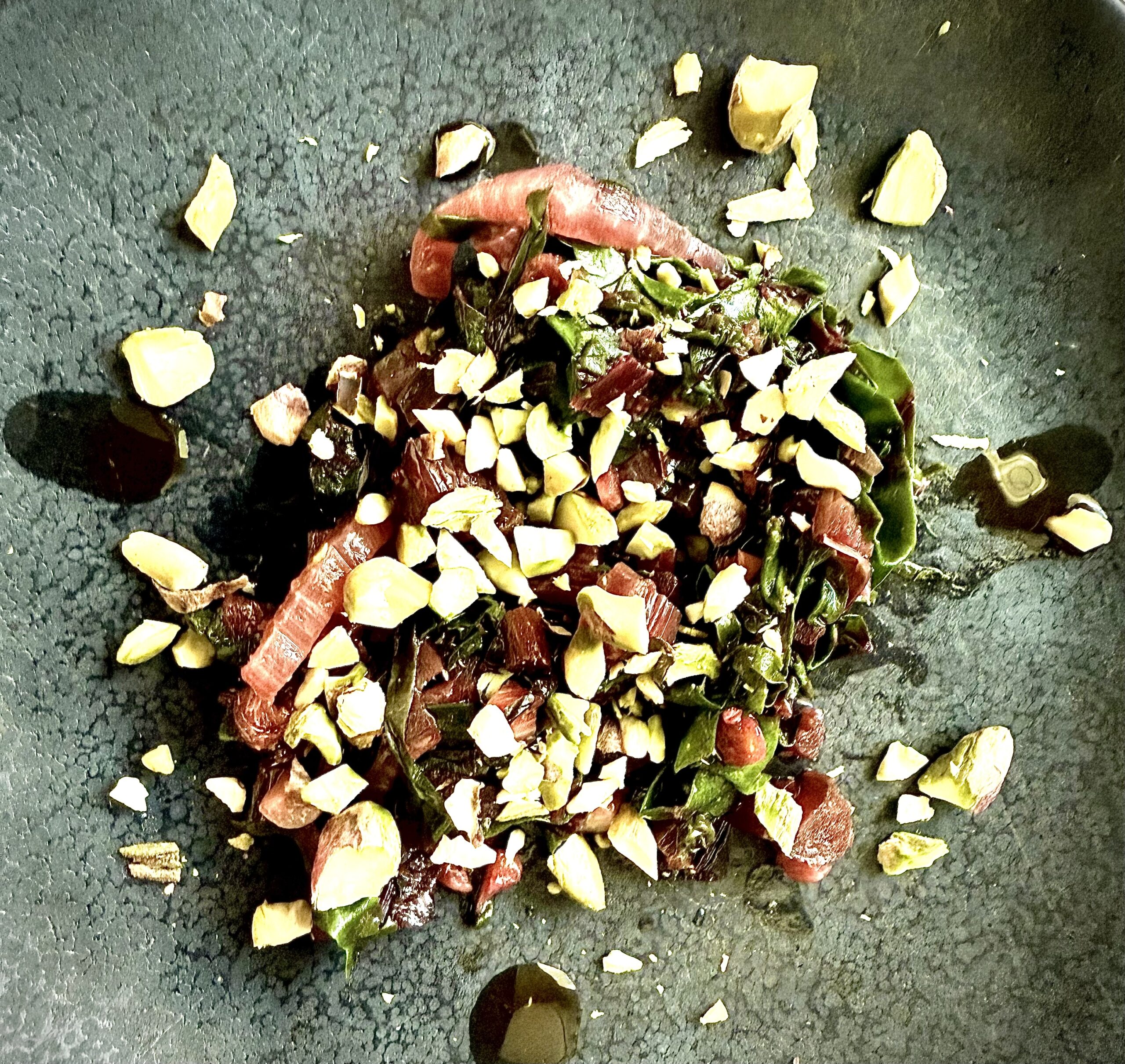
I had four gorgeous beets sitting on my counter, ready to be roasted. I preheated the oven, trimmed the stems, tossed the roots in oil, and slid them onto a sheet pan. And then I looked at the cutting board. There sat this massive pile of beet greens — vibrant, leafy, perfectly fresh — just waiting to be tossed into the compost bin. Not today. I’m the kind of cook who can’t stand throwing away perfectly good food. If I buy a bunch of cilantro, I’m using the stems too. If I roast a butternut squash, those seeds are getting toasted. And if I’m roasting beets? Those greens are becoming dinner. So I rummaged through the fridge and the pantry — half a white onion, a few cloves of garlic, a lemon that was a day away from being past its prime, and a bag of pistachios I’d been snacking on all week. That’s how this dish was born.
What Are Beet Greens?
Beet greens are simply the leafy tops attached to the beet root. Most people treat them like packaging — something you rip off to get to the good stuff underneath. But if you’ve ever cooked Swiss chard or spinach, you already know what beet greens taste like. They’re in the same family (Chenopodiaceae), and they cook up almost identically: tender, slightly mineral, with an earthy sweetness that mirrors the beet itself. The ruby-pink stems have a pleasant crunch, almost like celery, and they hold up beautifully in a hot pan. You’re essentially getting two vegetables for the price of one, so it makes no sense to throw half of that away. Nutritionally, beet greens are packed with vitamin K, vitamin A, and iron — ounce for ounce, they’re actually more nutrient-dense than the beet root itself.
Ingredient Tips & Substitutions
All the ingredients here should be easy to find at any grocery store. A few things worth noting:
The beet greens should look fresh and perky, not wilted or slimy. If you’re buying beets specifically for this recipe, look for bunches with the fullest, most vibrant tops. Golden beet greens tend to be slightly milder than red beet greens, but both work great.
For the pistachios, I use shelled, unsalted pistachios and roughly chop them so you get a mix of bigger chunks and smaller bits. If you don’t have pistachios, toasted almonds, pine nuts, or walnuts make a good substitute — you just want something buttery and crunchy to contrast the soft greens.
I use avocado oil because it has a high smoke point and a neutral flavor that lets the other ingredients shine. Olive oil works fine too if that’s what you have — you’ll just get a slightly fruitier flavor.
One whole lemon is what I use, but taste as you go. You want enough acid to brighten everything without making it sour. If your lemons are small, you might want one and a half.
The crushed red pepper is optional but recommended. It adds just enough warmth to tie the lemon and greens together without overpowering anything. Start with a small pinch and add more at the table.
Tips For Cooking Beet Greens
The technique is dead simple, but there’s one thing I want you to pay attention to: cook the stems and the leaves at different times. The stems are denser and need a head start. Give them about a minute in the pan before you add the leaves. The leaves wilt down almost instantly, and if you add everything at the same time, you’ll end up with mushy leaves and crunchy stems. Nobody wants that.
When you’re prepping, wash everything thoroughly — beet greens can be sandy. Chop the stems into small pieces (about half an inch) and slice the leaves into thin ribbons. Keeping the pieces relatively uniform helps everything cook evenly.
The onion and garlic go in first to build a base of flavor — just a minute or so, until they soften and start to smell amazing. Then in go the stems. Then the leaves. Then a generous squeeze of lemon juice, which brightens the whole dish and keeps the greens from tasting flat. Season with salt as you go. Taste it. Adjust. Cooking is a conversation, not a formula.
One common mistake: don’t overcrowd the pan. If you’re working with greens from more than four or five beets, cook them in batches. A crowded pan steams the greens instead of sautéing them, and you lose that nice bit of color and texture.
Storage & Ways to Use It
Leftovers keep well in an airtight container in the fridge for 2–3 days. They’re honestly just as good cold or at room temperature as they are warm — the lemon keeps everything tasting fresh.
I serve this alongside the roasted beets that donated their greens, which feels poetic — the whole plant on one plate. But this dish is way more versatile than a simple side. Toss it with pasta and a splash of the pasta water for an easy weeknight dinner. Spoon it over a grain bowl with some tahini drizzled on top. Pile it on crusty bread with a smear of goat cheese or ricotta. Fold it into an omelet or scramble. Or just eat it on its own — I’ve done that with some crusty bread, and it was one of the better lunches I’ve had this year.
Common Questions
Can I use greens from any type of beet? Yes — red, golden, Chioggia, whatever you’ve got. Red beet greens will have more colorful stems and a slightly more earthy flavor. Golden beet greens are a bit milder. Both are delicious in this recipe, and you can even mix them.
Do I need to remove the stems, or can I use the whole leaf? Use everything — stems and leaves. That’s the beauty of this recipe. Just separate them during prep so you can give the stems a head start in the pan, since they take a bit longer to cook than the tender leaves.
What if my beet greens are wilted? If they’re slightly wilted but not slimy or yellowing, you can revive them by soaking them in a bowl of ice water for about 10 minutes. They’ll perk right back up. If they’re past that point — slimy, brown, or smelling off — it’s best to compost them and start fresh.
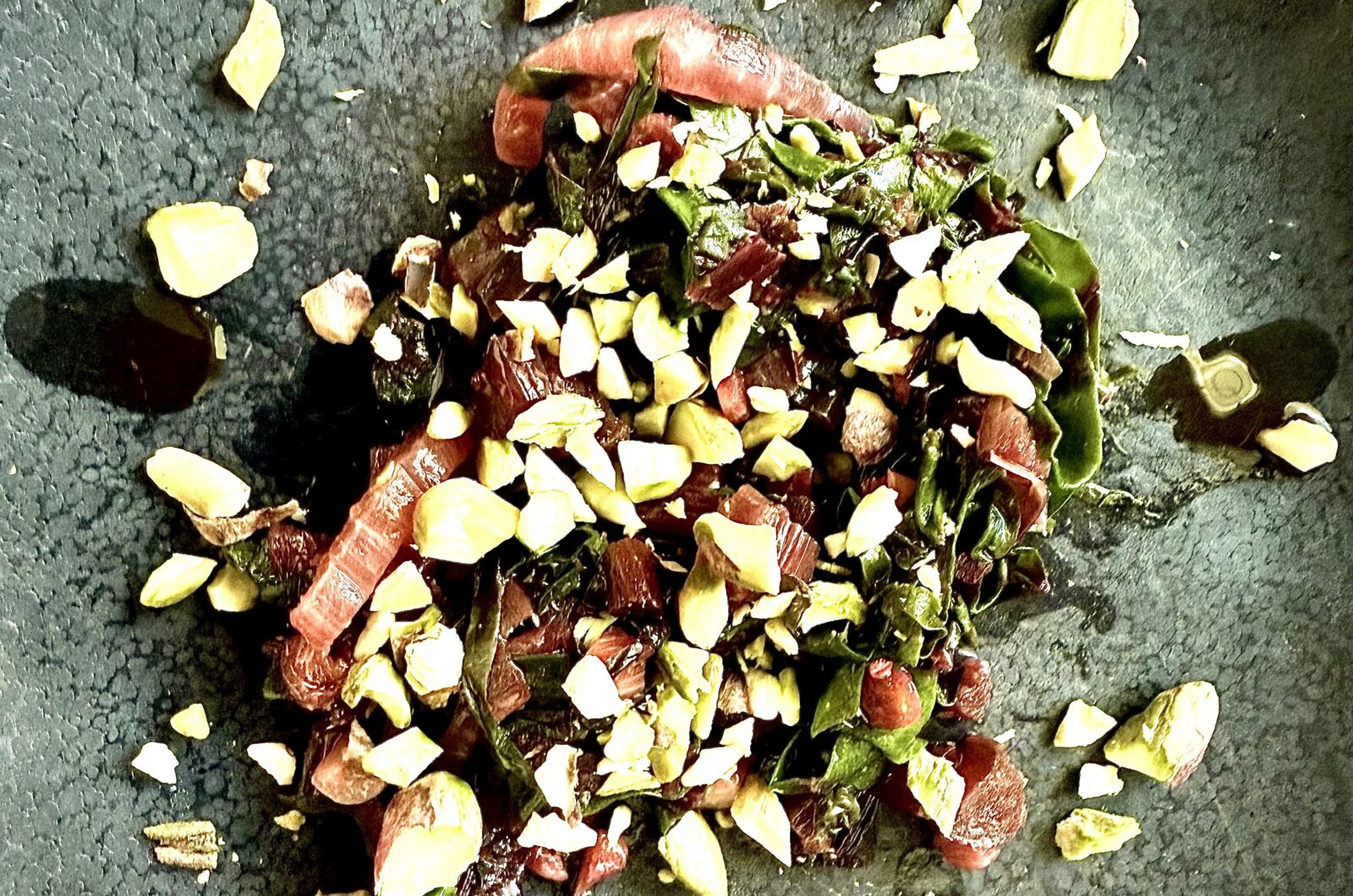
Lemon-Spiked Beet Greens with Pistachio Crunch
4
servings30
minutes40
minutes300
kcalTender beet greens get a squeeze of fresh lemon and a scattering of crunchy pistachios for a quick, zero-waste side that’s as beautiful as it is delicious.
Ingredients
4 beets
1/2 white onion, sliced
3 cloves garlic, chopped
1 lemon
1 tsp crushed red pepper
1 tsp salt
1/2 cup pistachios
1 tbsp avocado oil
Directions
- Cut the stems off the beets
- Wash the stems and leaves together
- Separate the leaves from the stems
- Chop the stems finely
- Slice the leaves thin
- Heat the oil in a pan, add the onion; cook for one minute then add the garlic
- Add the chopped stems, cook for one minute, then add the leaves, cook for another minute
- Add salt to your taste, then the juice of one lemon (or to your taste)
- Serve and top with pistachio and crushed red pepper